Video Game Post 2

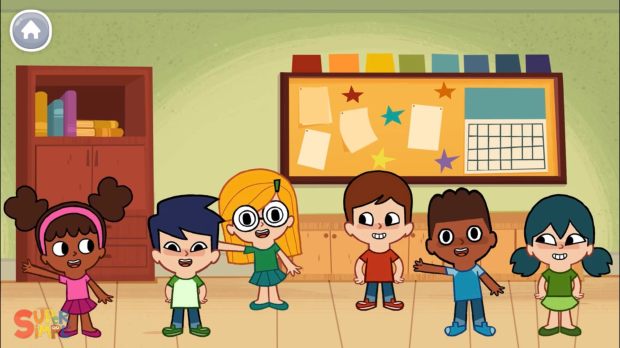
As I continue to play the Khan Academy Kids app, the characters in the clubhouse continue to discuss new and important topics for younger children. I have yet to see one topic repeated, which I believe keeps the game interesting and versatile. For example, when I logged into the game today we sang a hello song and talked about emotions and feelings. A critical competent to young child development and as Gee states “helping us prepare for the real word” (24). We discussed our feelings with greetings, asking “how are you today?” giving children the opportunity to share their individual thoughts while gaining real world skills. unnamed-1.jpgAbove is the hello song, I believe it is important to note the diversity amongst the children in the classroom.
Next, we worked on the letter C, hearing the sound it makes, words the letter C starts with, tracing the C, tapping images that begin with the letter C, spelling CVC words with the beginning consonant C… then as the child masters that letter the game adds in another letter to keep it pleasantly frustrating as Gee would call it. He states that “learning works best when new challenges are pleasantly frustrating in the sense of being felt by learners to be at the outer edge of, but within, their “regime of competence””(36). This idea ties into Vygotsky’s zone of proximal development learning strategy, where the zone of learning is not too easy so that they’re bored but also not too difficult where they are frustrated and give up. As we can already see there are so many different activities this game utilizes to keep the child’s interest. To keep them even more interested, once the children complete activities the mail truck comes to the clubhouse and drops off surprises for the characters, as seen in the picture below. unnamed-2.jpg
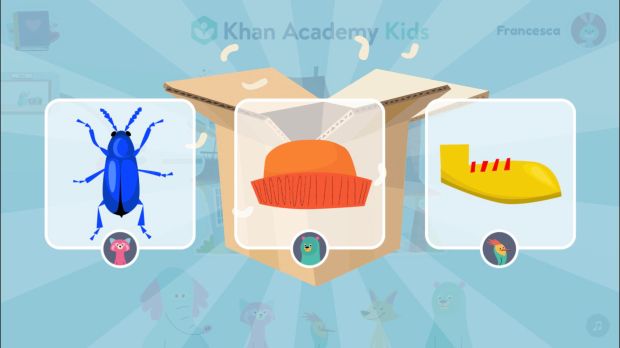
I feel as though the movement from one activity to the next also keeps the children engaged, because once they receive a surprise they will know it’s time to move onto the next skill. A sense of routine is very important for young children and it helps when they are guided verbally, according to Gee (38). This game uses verbal guidance from the bear in the clubhouse – she is always in the corner of the screen giving directions and if you need them repeated, you simply tap on her.

Link: tps://www.khanacademy.org/kids?from=lohp

Gee, J.P. (2007) Good video games, the human mind, and good learning. pp. 22-44.
Video Game Post 1

The video game I decided to explore was actually an application that can be downloaded on all types of devices. I downloaded it to my phone, but it can easily be set up for children to use through Ipads during center time, etc. The application is called Khan Academy Kids. Throughout my own education, my teachers have always recommended Khan Academy to explore new ways of learning or simply to grasp a concept better. Of course this was in my high school years because that’s when technology in the classroom really began to take off.

Khan Academy was created in 2008 by founder Salman Khan in Mountain View, California. It is a non-profit educational organization. The goal of Khan academy is provide world class education to anyone, anywhere.

Because this company is very reliable & highly recommended by educators, I figured their children’s educational app would be a good place to find high quality gaming.

To begin, the app opens asking the parent to provide an email address. Then after the email is confirmed the app asks that parent their child’s name, age and to pick an avatar. After this – you are brought to the kids clubhouse where you get to meet all of the characters in the game. There is one character who helps guide you throughout the simulation of the game. Throughout the clubhouse you are able to use skills such as counting, adding, listening and responding, sorting etc. Once you complete tasks you are rewarded with new items for your friends in the clubhouse. Every time you are awarded a new item, the next time you play it is a new topic to learn about (colors, numbers, orders, opposites).The games are never repeated and always give the player options, so it is always holding their attention.

It is important to let the child customize and chose their pathway in simulation games – it gives them a sense of individuality & engages their interests. It also helps them figure out their learning style. (Gee, 31). Since this game gives the option to chose an age level this means it is pleasantly frustrating – which according to Vygotsky’s theory of Zone of Proximal Development is what you want to aim for with your students. Not too easy but not too challenging.

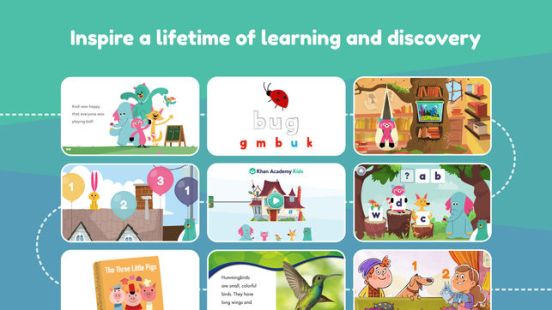
I have not yet been able to explore every level to the game but below are just some activities the children are asked to complete with the help of the characters in the game!

https://www.khanacademy.org/kids?from=lohp

643x0w.jpg

Introduction

Personal information:

  1. First name is Francesca, but everyone calls me Franki.
  2. My hometown is Novelty, Ohio. It is about 20 minutes away from John Carroll.
  3. Some of my hobbies included working out. I love to run I try to make sure I run a few miles a day. I also love taking car of my dog, Mila, she’s one years old and I am completely obsessed with her. This semester I am really busy with school and working. I nanny two adorable little kids ages 1 and 2.

Learning Style:

  1. I am definitely a visual learner. I am always writing or typing notes out during classes. I like individual work as opposed to group work. Group work is honestly super stressful to everyone involved and most of the work always ends up falling on one to two of the group members. I like to be given instructions and sent on my way, slow moving classes make me super anxious.

What Have I Been Reading?

  1. I love to read and try to read as much as I can. Usually during the semester I have no time because I am busy with school work and other obligations. Recently I read For White Folks Who Want to Teach in the Hood by Christopher Emdin. That book is truly amazing and I encourage all educators, even those who don’t want to work in inner city school districts to read it. I also recently read Educating Esme by Esme Raji Codell. It’s a journal written throughout a teachers first year. I also like to read fun and lighthearted books. I recently read I Had a Nice Time and other Lies as well as Nice is just a Place in France. Both books are written by a group called the Betches. They’re extremely relatable for girls in their 20’s and 30’s. I am currently reading their latest book When’s Happy Hour? 

Other Questions

  1. I honestly don’t have any questions about the class, because I had you for School and Society I believe I have a good idea on your teaching style and the class layout!