As I continue to play the Khan Academy Kids app, the characters in the clubhouse continue to discuss new and important topics for younger children. I have yet to see one topic repeated, which I believe keeps the game interesting and versatile. For example, when I logged into the game today we sang a hello song and talked about emotions and feelings. A critical competent to young child development and as Gee states “helping us prepare for the real word” (24). We discussed our feelings with greetings, asking “how are you today?” giving children the opportunity to share their individual thoughts while gaining real world skills. 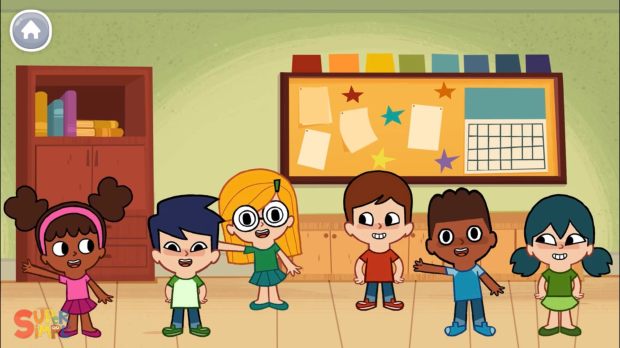 Above is the hello song, I believe it is important to note the diversity amongst the children in the classroom.
Next, we worked on the letter C, hearing the sound it makes, words the letter C starts with, tracing the C, tapping images that begin with the letter C, spelling CVC words with the beginning consonant C… then as the child masters that letter the game adds in another letter to keep it pleasantly frustrating as Gee would call it. He states that “learning works best when new challenges are pleasantly frustrating in the sense of being felt by learners to be at the outer edge of, but within, their “regime of competence””(36). This idea ties into Vygotsky’s zone of proximal development learning strategy, where the zone of learning is not too easy so that they’re bored but also not too difficult where they are frustrated and give up. As we can already see there are so many different activities this game utilizes to keep the child’s interest. To keep them even more interested, once the children complete activities the mail truck comes to the clubhouse and drops off surprises for the characters, as seen in the picture below. 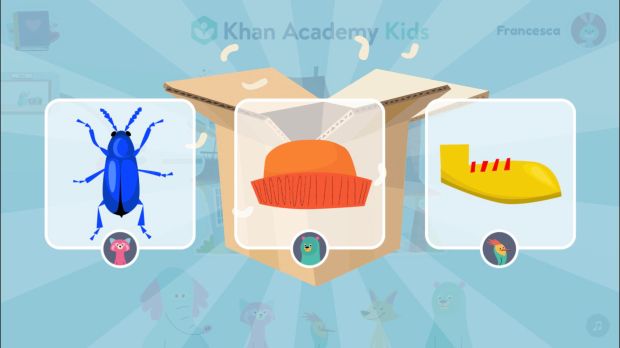
I feel as though the movement from one activity to the next also keeps the children engaged, because once they receive a surprise they will know it’s time to move onto the next skill. A sense of routine is very important for young children and it helps when they are guided verbally, according to Gee (38). This game uses verbal guidance from the bear in the clubhouse – she is always in the corner of the screen giving directions and if you need them repeated, you simply tap on her.
Link: tps://www.khanacademy.org/kids?from=lohp
Gee, J.P. (2007) Good video games, the human mind, and good learning. pp. 22-44.
 Francesca's ED Tech Blog
Franki, I happy you continued to explore the Khan Academy kids app. I love how the app discusses feelings and emotions by doing the hello song. I like how you mentioned Gee and his ideas of the “regime of competence.” I like that you talked about Vygotsky’s Zone of Proximal Development because it relates closely with student’s learning in their younger years. The games have to be pleasantly frustrating in order to keep the students engaged and so that they feel like they can learn without giving up when play stimulating video games. I can’t wait to see what else you write about as you explore the Khan Academy kids app. This app has been added to my list of things I will want to incorporate into my classroom one day. I think this app will keep the students engaged and create an environment where learning will be encouraged.
LikeLike